Pages

Tuesday, February 25, 2014

And This Is Love...


    So often we forget that the Gospel's foundation is relationship. Even if we understand that fact, we go about our relating in such a righteous manner that the entire purpose of interaction is lost. 

     The foundation to relationship is understanding and accepting the other person. When you make friends, you do not brush people off, telling them to come back to you once they attain perfection. Instead, you interact with them at their level; knowing them is your highest goal. Only once you have relational trust  can you begin to work through the personal flaws, yours especially.
   
     We cannot continue to disown souls merely because they fail to agree with us.
   
     We need to realize that friendship is not an endorsement of that person's mistakes [nor is their friendship a conciliation to your shortcomings either], but it is instead the first step in beginning to pour out love upon someone. Love is patient, love is kind, love keeps no record of wrongs.

     When we throw out the cliché that Christ was "counter-culture," and so we must be the same, I believe we forget what culture he was counter to. Christ did not come to be religiously conceited, joining the religious leaders in their holy, pontificating disapproval, shunning  the lowlifes who pursued their own lifestyles. It was these lowlifes that Christ made his friends and eventually followers and closest disciples.  Never once did he endorse their mistakes nor approve of their misguided living, yet he stoutly defended them from the religious and social furor so often directed at "the sinners." What an example of love we  miss in the actions of Christ! In the end, it was nothing he ordered them to do or convicted them of that persuaded them of his offered salvation - it was instead his constant service and willingness to sacrifice that brought them to his side. No man hath greater love than this that he lay down his life for his friends.

     His friends were the least of these.

     So what am I driving at? My question is, why we are more likely to invite someone from a bar to church than to let an open homosexual in at the door? Where do we derive the right to befriend or maintain fellowship with someone who cheated on their spouse or involved with pornography, yet deny a gay or lesbian any semblance of relationship?  What have we done to attempt to find common ground with those whom with we disagree? Or have we forgotten that  those faces belong to people too?

     We seem to have this notion that loving a person requires overlooking their wrong. And so, homosexuality and other sins remain unlovable because they appear so offensive. But loving a person is more than ignoring their flaws; it is accepting a person despite them. If we are to even approach culture, we must live with this sort of love.

     We cannot hope to persuade the world otherwise unless the world trusts us first. As it stands, the Church is not seen as trustworthy. Instead, it is viewed as a homophobic, anti-progressive, conservative base rife with stereotypes and fried chicken. Is this what is true? Yes, we differ from popular opinion and disagree with much of secular thought; however, we have allowed our disagreements to widen the already existing rift between the Church and the Culture. We have forgotten that a similar rift - the eternal separation between God and humanity - was bridged through the love of one man, Christ. Let us minister with that self-same love and bridge this modern, ever widening gap. Let us offer more to culture than a repeated condemnation. Let us work to find common ground upon which to build relationships.


     My brother and I have had our disagreements over the years. I was more often than not the overbearing, self-righteous firstborn, burdened with the maintenance of holiness and personal image. I saw him as the wayward sibling with whom I had been tasked to bring back to the sheepfold. For every flaw he counted in me, I would count twice as many in him, and remind him  to boot. And so, we tolerated each other, suspiciously watching the other's action, each convinced the other was wrong. In all those years, we had little affect in our attempts to conform the other to our standards.

     The day came however when I was to leave for college. We loved each other dearly, brothers in battle, comrades in life to the last. Yet that same suspicion remained. The separation of our lives for the next weeks effected a change though.  The suspicion passed away and was replaced by an irrepressible sense of honor. That Christmas was the first time we ever discussed life openly or considered the other's advice.  We replaced what had been a begrudging existence of disagreement with a grateful relationship of love. We loved each other as equals who cared rather than as disapproving competition.

     As I did for so many years, so we too as Christians have forgotten who our brothers really are, and we have forgotten how to love them. When you look into the eyes of a stranger on the street, you look into the eyes of your brother. When you gaze upon a crowd, you gaze upon a gathering of brethren. When you pass by a searching soul, you pass by a soul kindred to your own. 

     But do you seek to bring these searching brothers an answer? Then you must first love. For without love, there is no life to be given.

Tuesday, April 30, 2013

Time to Talk? [North Korea Throwdown]

     
North Korea still remains skeptical of
US diplomatic attempts.
               After dominating headlines for the last month, North Korea has hinted that it may be willing to bring an end to its nuclear brinkmanship and begin a new round of talks with the United States. Pyongyang issued a detailed statement this past week outlining its terms for the dialogue, including demands that the US cease its “nuclear war practice” and annual war games with South Korea and rescind the stringent sanctions against North Korea’s economy.
               “They should take measures of retracting the U.N. Security Council’s ‘resolutions on sanctions’ cooked up under absurd pretexts,” the Policy Department of the National Defense Commission, North Korea’s highest governing body, said in a statement carried by its official Korean Central News Agency. “They should give formal assurances before the world that they would not stage again such nuclear war drills to threaten or blackmail [the North].”
                In response, a South Korean defense ministry official requesting anonymity stated “The tensions should gradually decrease from here, but we cannot lose ourselves to complacency. We do still have to be prepared for any provocations.” Nevertheless, as US Secretary of State, John Kerry, said during his recent visit to the peninsula, “...our preference would be to get to talks.”

                The only question remaining is what will the talks focus on?

Diplomatic Disasters
                World diplomacy with North Korea has a long and troubled past, plagued by the fact that US and international officials are completely unsure of the nation’s political status. Forced to use a fuzzy interpretation of state propaganda and gathered intelligence as a barometer, US diplomats have often missed key opportunities to get through to either of the Kim Jong’s. In the past, the US mantra has been to stop the North Korean nuclear program and to guarantee South Korea protection should Northern threats be actualized. However, if the US enters this new set of talks with the same mindset, the only item that will be guaranteed is a continuation of the vicious cycle of threats and provocation.
                Now that North Korea has a nuclear weapon, as well as the ability to launch such warheads globally coming in the near future, the US cannot afford to continue to treat North Korea as a misbehaving child but instead must look upon them as a viable threat. With that in mind, US diplomats need to recognize the fact that the current diplomatic stance only makes Kim Jong Un feel more threatened than reassured.

Ready for Reform
                Were Kim Jong Un reassured, the world might begin to see North Korea open up to more western thought and technology. Kim Jong Un has discussed improving North Korea’s dying economy and has hinted that the nation may move in the direction of reforms [however slight]. This fact was evidenced by the recent visit of Google CEO Eric Schmidt to Pyongyang, showing that Un may be ready to allow new development in North Korea.
                However, Charles Armstrong, Director of Korean Research at Columbia University, believes that any hope of change will be stifled by the current US approach to North Korean relations. “The dilemma, though, is that North Korea can only embark on serious reform from a condition of what it considers absolute security,” Armstrong notes in an op-ed for CNN. “Unfortunately, the quest for security and the desire for economic improvement have been in contradiction for some time. A genuine opening could unleash political and social changes...while the path of security through nuclear deterrence and missiles have led time and again to confrontation and renewed isolation.”

                The old adage states “Do not attempt to reason with a fool. He will only drag you down to his level and beat you over the head with his ignorance.” Call it nationalistic, but North Korea has been foolhardy in its recent provocation of the US. As history has shown, you cannot beat the ignorance of out of the communist political system, but instead, you can speak a language that they do understand: money. Only by providing  strong incentives instead of punishments, obtainable rewards instead of sanctions, and deliberate reassurance instead of threats in kind, will the US and the rest of the world slowly lure North Korea down the path of peace.


Sources:


-Charles Armstrong, “Why Sticks don’t work with North Korea,” January 25, 2013, http://globalpublicsquare.blogs.cnn.com/2013/01/25/why-sticks-dont-work-with-north-korea/

Sunday, April 28, 2013

Under Pressure...

Found this article online, and thought it was brilliant.

Enjoy.

----------------------------------------------------------

By Noah Lotte

                For the politicians on Capitol Hill, I have yet another issue to bring to the table. I realize that you are extremely busy debating immigration and soundly arguing over gun control, however, recent events beg your attention elsewhere. To my fellow Americans, I recognize that we all struggle to meet our mortgage payments, much less figure out how much in taxes we actually do owe the government, but the time has come for us to recognize the newest threat to our liberties and freedoms.
                I have been deeply saddened the last week, praying for the families of those killed and maimed by the dual explosions at the Boston Marathon.  I dearly hope that this atrocity will never be forgotten and shall never be repeated. We must do our utmost to prevent such a bombing from ever occurring in the future. Examining the sequence of events that brought about the attack, it is clear what course of action we must take.
                For the sake of our liberties and our national security, I believe that legislation must be passed to ban the use and sale of pressure cookers. It was these everyday items that were used in the bombings, and had the terrorists been unable to access the cookers, these attacks could have well been prevented.  We must remove these tools of destruction from our homes and from our society. There will always be groups opposed to such legislation, but we cannot afford to let our political opinion stand in the way of safety. At the very least, we must require extensive background checks for anyone attempting to purchase a pressure cooker. Allowing a pressure cooker to fall into the wrong hands will only have the same consequences as those in Boston. It is our added civic duty to ensure that crazy aunt Matilda cannot unrestrictedly use pressure cookers as well.  Recognize we have just as much a duty to protect that nation as the government.
                In addition to background checks, we must also work to limit the amount of atmospheres pressure cookers can withstand. Currently, the average pressure cooker allows the user to build the pressure up to dangerous levels, as evidenced by the numerous pressure cooker accidents that have occurred in the last decade. Were we to limit the amount of pressure per cooker, we will reduce the potential devastation wreaked by accidental and purposeful explosions.
                My fellow countrymen, if I were the president and I knew this legislation would save one life, I would pass it. If I knew it would save a hundred lives, I would pass it.  But simply knowing the enormous danger that the unregulated use and purchase of pressure cookers poses to our society’s safety is enough.  We cannot afford to live in the past where these so-called “useful” items are freely accessible to anyone—if we are unsafe now, we may never have a future.
                Let us all put our signatures to this legislation and with our pressure protect the nation for our children.

Wednesday, April 17, 2013

Wanted: Mars Settlers...


     How is that midlife crisis treating you? Highschoolers--tired of school? Well, the good news is that there might be a way to escape from it all. The bad news? It will take the rest of your life.
      Not-for-profit Netherlands organization, Mars One, sent out a casting call last Monday for any and all volunteers for a decades long trip to Mars. Participants will also star in the consequent reality tv show, "Stars on a Planet." Mars One is looking for truly anyone: no prior experience as an astronaut or a degree in science required. Simply make a video stating why you should be shipped to Mars, and send it in. Great stuff, right?
      As of so far, the organization has received over 10,000 entries, from out of which the board of directors hopes to select 24 lucky [or unlucky depending how you see it] individuals. Mars One hopes to launch the first crew of four by 2023, with subsequent launches of four man teams every two years after.
       Money could be a problem though. Sending stuff into space has never exactly been cheap, much less getting humanity to Mars. Director and co-founder Bas Landsorp says he hopes the $25 application fee will waive some of that cost, though he notes that there is still much more fundraising to do. The accounting department estimates that final costs will be upwards of $6 billion. [sounds great. I'll send in the billion I found in the gutter the other day.]
      Props to private organizations [SpaceOne included] for showing explorative initiative. 

Tuesday, April 16, 2013

Finish...

Physics tonight. And a poem.

Finish.
What are you fleeing?
Running as if the Devil was right behind.
Kicking up little spurts of gravel,
In the recess of your mind.

Starburst, fireworks
Your breath comes heavy and hot.
Always looking for that finish tape
But never able to stop.

Going in circles
I can't seem to keep a straight line.
Running through the dark
Chasing the setting sun.
Twisting through the violent maze
God, when can I be done?

Colors burst, fireworks
Dead ends again and again.
The tar bubbles in the heat as I flee
My feet are black with stain.

Throw me down on the headshrink's couch
Drug me out with gin.
I'll still keep running, pounding on.
Flying forward, but I'll never win.

Blood burst, fireworks
Voices tell me to carry on
Gasping out my fleeting breath,
God, let me see the dawn.

Yes, to God I cry out my soul--
How dare He answer me not.
If He truly cared, loved at all,
He'd grant me peace to stop.

Rain burst, fireworks
Washes away the blood from my eyes
All this time, running the wrong way--
"It is finished," the dying man sighs

I take a step, and then I stop
Hope pouring into my veins.
Oh, this is peace, this is rest--
Letting go in my last death strains.

Lifeburst, fireworks
In death there's life I've found.
Not a grave but true paradise,
Now unchains me from the ground.

I began to walk, and then I run
Not from a fear but joy.
I've learned now its not a race
Not to a point, but to a grace
Not through a line, but through a grave
Now all a celebration of joy.

Starburst. Firework.
Breathe in. Love. Breathe out.
Sunrise, sunset--I see it all.
Fear? Its what I live without.

[all the times you ran away, love pursued you even more]

Friday, March 29, 2013

You say let it go...

      "I'm sorry. How could you ever forgive me?"
      Its a phrase that is always hard to say to a friend, and even harder to hear from one. Its a statement of complete remorse that painfully stitches up the wounds of a wrong.
       Forgiveness.
       Its tough to ask for and sometimes an enormous challenge to give to someone. We often hold on so tightly to our grudges against our siblings, against the world, stewing in the anger or frustration that we believe to be so righteous.

      But let it go.

     Oftentimes we focus so much on Easter Sunday, but we sometimes fail to recognize the magnitude of what happened today almost 2,000 years ago. See, today was the day that Christ died, the day that His blood poured out of His body satisfying God's demand for a righteous sacrifice for the sins of humanity. The price of man's sin had to be paid--and that price was death.
       A death that Christ gave Himself to willingly.
       Because of that death, the cost of every sin of the world--past, present, future--was fully paid. The ledgers of debt were cleared, the negative balance was erased. And every sin--past, present, and future--was forgiven.
       This is a fact that we so often overlook--that everyone has been fully and completely forgiven. You don't have to belong to a megachurch; you don't have to sing in the choir; you don't have to be the perfect father, mother, or sibling; you don't have to have a clean record; you don't have to be straight.
        It has all been forgiven.
       When I step out my front door, I sometimes can't help but look at the world with a skeptical eye, writing it off in my mind as a total, decadent, twisted loss. I turn and look into the mirror of my circle of friends and family, and see us as so much better than the world, those very special few who have a message of righteousness and love to bestow to those we choose. But I forget that Christians all were forgiven just as much as the rest of the world. We've just chosen to recognize the fact. But the fact that we ignore was that Good Friday wasn't about creating elitists, but about destroying the barrier between us and God's love.
      When Christ walked the earth, He didn't selectively pick and choose the righteous rulers to become His comrades; He spent His time and ate His meals with fishermen, with tax collectors, with prostitutes. His love was for the scum of society, the people that the righteous looked upon with repugnance. And when He died, He forgave them all. Even against the soldiers who provided His cruel and painful death, He refused to hold a grudge. "Father, forgive them."

      I firmly believe that you cannot be a Christian if you do not accept Christ's love for you. I firmly believe that you cannot be a Christian and refuse to share Christ's love for the entire world. Yes, God is just; consequences will come for where we all have abandoned Christ in our lives; but we get hung up on proclaiming God's great wrath and justice and forget to explain that every single one of us has been forgiven. We can't selectively choose to discriminate against people just because their sins stand out more or smell worse than the sins of the person next to them. We cannot shut the doors to the Church simply because someone has tried to find love in drugs, alcohol, pornography, or homosexuality.
       We so often urge unbelievers to not waste the gift of forgiveness that Christ's death provides, but I think it is often we who waste this gift by forgetting that every person is loved and is forgiven by Christ. We write the person off as a total loss, failing to see the forgiven soul under the sinful flesh.

        Friends, do not forget the reason for Christ's sacrifice.

       It is hard to forgive someone, yes. My brother? Its hard. Myself? Doubly hard. The world? The challenge of a lifetime.
     
But it all has been forgiven by Christ. Shall we do the same?

[You say let it go]

When you feel like you're damaged goods, broken by your past or by your life, remember: every fiber of your being is loved, and every wrong deed in your history was washed away by the crimson sacrifice of Christ today.

Thursday, February 28, 2013

DEFCON 1: Teddy Bears

          
        A military court in Belarus has sentenced one of its border guards to two years in prison for failing to protect the country from an invasion by foreign teddy bears last July.
            No guys, it’s not April yet.

The invading teddies parachuted into the capital city of Minsk and other outlying areas, carrying placards protesting Belarusian human rights abuses.
While initially a publicity campaign carried out by a Swedish advertisement agency seeking to show solidarity for pro-democracy groups, the stunt has morphed into an all-out diplomatic war between Sweden and Belarus. In response to the plane drop, Belarus withdrew its ambassador from Sweden, and president Alexander Lukashenko issued a state memo declaring that any further “teddy-planes” would be shot down.
And in the midst of all of this, the border guard who failed to report the plane in a timely manner has become a scapegoat.

Not So Cuddly
            You may ask yourself, what kind of nation would so blatantly show hate for teddy bears? Unfortunately for the teddies, Belarus is a prime suspect. For the last few years, Belarus has been ranked by Amnesty International as one of the most dangerous nations with respect to human rights. As the CIA World Factbook notes, Belarus “while a republic in name is in fact an authoritarian dictatorship” ruthlessly ruled by Alexander Lukashenko.
 In recent years, the regime’s human rights violations have steadily increased, from the unwarranted arrest of more than 600 political activists and presidential candidates at a rally to strict sanctions against Jewish and LBGT communities. The US State Department classifies Belarus as a rogue nation, detailing the government as “a brutal, authoritarian dictatorship that blatantly ignores human rights and fundamental freedoms.”

Surprisingly, Belarus is often left off the list as one of the most restrictive nations in the world. However, these teddy bears may have just saved the day—bringing the plight of Belarusians back into the spotlight.
  

Tuesday, February 26, 2013

Dear Money...

     Should the government spend more money to stimulate the economy? Should the government spend less and let the private sector be the stimulus? The debate in the US rages back and forth.

     And then I found this article. Its from my macroeconomic class [so it may refer to "last chapter"], but I think it provides some good points against increasing government spending.

     Feel free to debate it.
-------------------------------------
(from Gwartney & Stroup Macroeconomics 5th Edition)

Fiscal Policy 

What do we mean by the term fiscal? Merriam-Webster says that it comes from the Latin word fiscus, which means “basket” or “treasury.” It has come to mean anything pertaining to government financial matters. This can include government taxation, spending, and borrowing. All three of these areas of fiscal policy will affect the economy. Basically, changes in the government’s budget affect the overall economy. How so?

When the government spends more than it receives as revenue, there is a budget deficit. Assuming a constant money supply, the deficit is funded by borrowing. Typically, the US Treasury borrows by offering bonds.

When government revenues exceed government spending, there is a budget surplus. The surplus will reduce the government’s debt burden.

What causes the government’s budget to change? General changes in the economy affect both taxes and spending. Also, there may be intentional changes in government spending or taxation. This is called discretionary fiscal policy.

Last week we began our discussion of attempts to correct economic instability. This week our focus will be on attempts to use fiscal policy to affect the economy. You have already been introduced to Keynesian theory In general. Keynesian theory led the government away from the desire to balance the budget. Why would we want to balance the budget when we could simply change our spending habits to fix the economy?

The Keynesian view of fiscal policy is that the government can influence the economy by changing its budget. When we are in a recessionary period, a Keynesian would suggest that we should either increase government spending or reduce taxes. In other words, running deficits will help move us towards potential output and full employment. If inflation is becoming a problem, a Keynesian would suggest that reducing government spending or increasing taxes would put downward pressure on prices. So, running a surplus should help curb inflation.

If we have the tools to make it so, why isn’t our economic world perfect?

Crowding Out: reality sets in and spoils our noble ambitions…

This sounds like a nice simple idea, but there is a significant problem associated with borrowing to finance a government deficit. Do you remember our discussion a couple of weeks ago about how resource markets are interrelated with the overall market for goods and services? Government borrowing affects the demand for loanable funds. When the government needs to borrow funds to cover a deficit, it increases the overall demand for loanable funds. Other things constant, this pushes the price of loanable funds (the interest rate) upward. The higher interest rates will dissuade private spending. This scenario is referred to as crowding out. Thus the increased borrowing of the government crowds out the private sector from borrowing and spending. This makes the deficit-running fiscal policy less effective.

There is even more to this situation. Remember that higher interest rates will draw interest from foreigners who want to invest in dollar-denominated financial assets, thus making the US dollar relatively more valuable (appreciating against other currencies) and leading to a decline in net exports. (It will be more expensive to purchase goods with dollars.) So, the crowding out effect pretty much wipes out the intended effect of the policy. Whew! And we just thought we could run a little deficit and fix the economy… Oh boy, what a mess we have gotten ourselves into!


But wait, it appears there may be even more going on…

What if people realize that someone is going to have to pay for that new government spending? After all, we are no dummies. The New Classical view of fiscal policy argues that people will anticipate having to pay more future taxes due to current government spending and borrowing. This awareness will cause them to save more and spend less. The reduction in spending caused by increased savings will offset the deficit’s affect on the interest rate as well. Thus, the fiscal policy is really of no use. 


Even more discouraging news for those who would perfect the market via fiscal policy…

Do you remember how President G.W. Bush sent out checks to help stimulate the economy? Did you notice the time lag between reading about his intentions in the news and actually holding a check in your hand? That time lag is also a classic problem with discretionary fiscal policy. In fact, if it takes too long for a fiscal policy to actually be carried through, the result may be all wrong.

It should also be noted that there are some automatic fiscal stabilizers already in place. Unemployment compensation, corporate tax profit, and progressive income taxes work in opposition to the direction of the economy. When national output and income rise, unemployment compensation declines, corporate tax revenues increase and progressive tax revenues increases. On the other hand, when national output and income decline, unemployment compensation expenditures increase, corporate tax revenues decline and progressive tax revenues decline. So, these items tend to increase the budget deficit automatically during times of recessions and increase the surplus (or decrease the deficit) during expansions.


Could things get worse?

If you thought that you could fix the economy by implementing fiscal policies, I am sorry to disappoint you, but I must add this one last downside to the whole concept. I could sum it up in one word – politics. Politicians are motivated, as everyone else, by self-interest. For that reason, they will be much more likely to vote for expansionary policies than restrictionary policies. Politicians who vote for more spending are generally more popular than those who vote for restricting spending. This naturally makes deficit spending more likely, even when inflation is high.


Let’s sum it all up.

Here is the modern-day wisdom regarding fiscal policy:

· Timing is difficult and critical.

· Automatic stabilizers tend to move us towards potential output and full employment.

· Fiscal policy is not really that productive.

· All the demand-side policies we have discussed thus far will have differing results based upon all sorts of variables.


So, as time has passed, the potency of fiscal policy has come into question. Please be sure to pause a moment to review actual government budget figures which are presented in Exhibit 8. You may continue the graph in your own mind to include the massive spending of the recent years and imagine what sort of long-term effects may emerge from the current administration’s policies.

Friday, January 25, 2013

Mali: A Defeat Waiting to Happen...

French soldiers prepare for a patrol in Mali (AP/Reuters)
The joke goes that if you Google “French Victories,” the search engine will snarkily ask you if you meant to search for “French Losses.” While this sort of comment rankles many French patriots (I'm part French myself), the truth is that ever since the 17th century, France’s track record of winning wars has been extremely poor. And once again, it appears that France has involved itself in a war that it simply cannot win, this time in the North African nation of Mali.

Into Mali
On Wednesday, January 16, French soldiers launched an extensive air and ground campaign against Islamist rebels in Mali. The Guardian reported on the 16th that France launched air strikes against Islamist camps and mobile forces in Mali, its former colony, to stop a rebel offensive and "safeguard" Mali's existence. Troops from Nigeria and other regional powers will join about 1,700 French troops involved in the operation, part of a contingent expected to reach 2,500 soldiers. President François Hollande said France intended to "destroy" the Islamists or take them captive if possible.

These Islamists are al-Qaeda linked fighters that took control of the northern deserts of Mali early last year. The militants are well armed and well trained: Reuters notes that many are coming directly from the US conflicts in the Middle East. Determined to hold onto their gains in the country, the Islamists have warned that French troops will become bogged down for years.
The people of Mali are welcoming the French soldiers with open arms: the Islamists have imposed harsh Sharia law upon the region, cutting off hands and feet for minor crimes in addition to desecrating the sacred religious shrines in the fabled city of Timbuktu (yes, it does actually exist). The citizens have feared for their lives, worried of the potential damage the volatile terror groups might wreak. Mahamadou Abdoulaye, 35, a truck driver who fled from the northern Gao region of Mali into Niger, said the Islamists new recruits were both armed and inexperienced: a dangerous combination.
"We were all afraid. Many young fighters have enrolled with them recently. They are newly arrived, they cannot manage their weapons properly. There's fear on everybody's face," he said.

Nuclear Concerns
Unfortunately, there is more at stake here than meets the eye. Although Mali was originally a French colony, this invasion is not merely a “mother nation looking out for her children.”  As Mark Tran of The Guardian notes, the West and Mali's neighbours fear that the Islamists, who took over northern Mali, an area the size of France of desert and rugged mountains, will use the country to destabilise the rest of west Africa, including neighbouring Niger, France's main source of uranium for its nuclear industry.If the Islamists gain complete control of Mali, turning the nation into a stronghold, the potential that terror groups such as al-Qaeda In the Maghreb (AQIM) will use the area as a base for launching international attacks is huge. The potential that AQIM will use the area as a foundation for a takeover of Niger’s vast supplies of uranium is even greater. As J.G. Gilmour explains, the AQIM has direct ties to the Nigerian terror group, Boko Haram. Both groups have sworn to “expel all westerners in the Sahel and establish an Islamic theocracy with poor countries which have limited resources and weak military forces to react to their insurgency operations.”  The AQIM is hoping that terrorism activities will destabilize such countries by recruiting extremists to their networks and cells. Ultimately, this destabilization puts France’s almost unending supply of uranium at risk. This uranium, as activist Adam Cooper reports, is much of the reason for initiating this offensive in Mali.

Without an End
If France has not learned from the US example in nations like Afghanistan or Iraq, then they will learn soon enough that fighting terror groups is utterly different from fighting a conventional war. As the US realized in Iraq, enemy soldiers may be anywhere, and they have no qualms about hiding among the civilian population.

French Army chief Edouard Guillaud said France's air strikes, involving Rafale and Mirage jet fighters, were being hampered because militants were using the civilian population as a shield.
"We categorically refuse to make the civilian population take a risk. If in doubt, we will not shoot," he said.
This honor of the division between militant and civilian is the great weakness of Western nations attempting to eradicate a terror group from a region. Nations such as the US, Britain, and France come to the conflict with rules of war and the terrorists capitalize upon those restrictions. Defence Minister Jean-Yves Le Drian acknowledges the difficulties facing France. "It's tough. We were aware from the beginning it would be a very difficult operation.”


Any five year old will tell you that it is almost impossible to play with someone who refuses to respect the rules of the game. If the experiences of the US in Iraq and Afghanistan are any indication, this holds true not only for Candyland as it does for war. France may maintain the moral high ground in this conflict, but will receive a defeat in return.


Tuesday, January 22, 2013

Grace...

Physics tonight. And a poem.

Grace

The drops spatter at the windowpane
Nose to glass, I watch the rain.
Water mixed with Autumn mold
A world for me that's bitter and cold.

A robin flits by, shaking its beak,
Escaping the frost that has left it weak.
A thought escapes as I dry my eyes,
An added cloud in my misery gray skies.

A wounded heart sits silently here.
No answer to this soul's shouted prayer.
Please; a way to run, to hide.
I can't handle this grief, I tried.

A bit of red in the now falling snow,
This broken heart bleeds out below.
A bit of coal amongst all the white,
Mars the beauty in the fading light.

The snow has stopped, and so have my tears.
The cold remains, and so do my fears.
Anger; tell me why did this happen?
The argument circle I'm still trapped in.

Tell me I'll be alright, that I'll be ok.
No, leave me alone--keep your cliches.
I can't do this myself--please let me be strong.
Something make my life right, its now so wrong.

The orange lines of sun split through the clouds
Warm on my face, the sunset glow astounds.
A ray pierces my heart, through the painful dark hue,
And I hear a whisper, "I painted this all for you."

[when I wiped the tears from your face / I called it all, Grace]


Wednesday, January 16, 2013

Divorce Notice...

A friend sent this to me. Its snarky, but sometimes I think a bit of humor is needed in politics. A good idea? I'll leave that to you to decide.
(note: this is not my own work)
_________________________

DIVORCE AGREEMENT


Dear American liberals, leftists, social progressives, socialists, Marxists and Obama supporters,et al:

We have stuck together since the late 1950's for the sake of the kids, but the whole of this latest election process has made me realize that I want a divorce. I know we tolerated each other for many years for the sake of future generations, but sadly, this relationship has clearly run its course.

Our two ideological sides of America cannot and will not ever agree on what is right for us all, so let's just end it on friendly terms. We can smile and chalk it up to irreconcilable differences and go our own way.

Here is a our separation agreement:

--Our two groups can equitably divide up the country by landmass each taking a similar portion. That will be the difficult part, but I am sure our two sides can come to a friendly agreement. After that, it should be relatively easy! Our respective representatives can effortlessly divide other assets since both sides have such distinct and disparate tastes.

--We don't like redistributive taxes so you can keep them.
--You are welcome to the liberal judges and the ACLU.
--Since you hate guns and war, we'll take our firearms, the cops, the NRA and the military.
--We'll take the nasty, smelly oil industry and the coal mines, and you can go with wind, solar and biodiesel.
--You can keep Oprah, Michael Moore and Rosie O'Donnell. You are, however, responsible for finding a bio-diesel vehicle big enough to move all three of them.
--We'll keep capitalism, greedy corporations, pharmaceutical companies, Wal-Mart and Wall Street.
--You can have your beloved lifelong welfare dwellers, food stamps, homeless, homeboys, hippies, druggies and illegal aliens.
--We'll keep the Alaskan hockey moms, greedy CEO's and rednecks.
--We'll keep Bill O'Reilly, and Bibles and give you NBC and Hollywood .
--You can make nice with Iran and Palestine and we'll retain the right to invade and hammer places that threaten us.
--You can have the peaceniks and war protesters. When our allies or our way of life are under assault, we'll help provide them security.
--We'll keep the SUV's, pickup trucks and oversized luxury cars. You can take every Volt and Leaf you can find.
--You can give everyone healthcare if you can find any practicing doctors.
--We'll continue to believe healthcare is a luxury and not a right.
--We'll keep "The Battle Hymn of the Republic" and "The National Anthem."
--I'm sure you'll be happy to substitute "Imagine", "I'd Like to Teach the World to Sing", "Kumbaya" or "We Are the World".
--We'll practice trickle-down economics and you can continue to give trickle up poverty your best shot.
--Since it often so offends you, we'll keep our history, our name and our flag.

Sincerely,

John J. Wall
Law Student and an American

P.S. Also, please take Ted Turner, Sean Penn, Martin & Charlie Sheen, Barbara Streisand, & ( Hanoi ) Jane Fonda with you.

Tuesday, January 15, 2013

Rasa, Rasa...

Physics tonight. And a poem.

Rasa, Rasa

My heart beats,
As a man, as a drum.
Hear the lifeline of this earth
Dominion and destruction

Return to this paradise
Respite of the fallen
Roll the dice, pass the cup
Revel in this pleasure den.

If you fly higher
You shall fall all the more
Ten graves deeper down
Looking only to travel lower.

Fall away, call away
What are you looking for?
Famed in the darkness
But starbright at the core.

Raise up, rise up.
Rasa, rasa, tabula rasa.
Rewrite your story,
Reclaim those you lost.

A man once paid ransom for you,
Heaven met Earth for your soul.
Death brought life: Ni kumaliza
Let your debt be paid in full.

See your deeds, failures, your scars
He sees them, knows where you've been
Where you've lived up, down, tried to let go
But calls you Saint, no more condemned.

Child, child, child
Why do you weep?
When Hope seems gone,
Joy destroyed,
Love has left,
Life at dead end.
Remember: you're the one I chose to keep.

[never stop living]

Thursday, December 27, 2012

Recap: 2012


Now is the time of year that any self-respecting news organization publishes its "best news of the year" in high style with flashy graphics and an upbeat soundtrack. Unfortunately I neither have the time nor budget to produce a video for you, however, I will do my best to replicate the other aspects.
 I have compiled this list from my own musings, as well as with input from other reputable sources. I have tried my best to pick news events that happened on an international scale and that had exterior ramifications for not just the nation involved, but for the world on a larger scale.  This list is by no means extensive--many of you may feel that I arbitrarily picked my subjects--but know that I gave it my best shot. Also, the numbers are not a ranking scheme, but merely a way for me to stay organized; all these events were equally important.
            Thus, without further ado: the top 10 news stories of 2012 (if you want a soundtrack for this recap, have at it:  Soundtrack for 2012)

1. Egyptian Presidential Election & Constitution
            Of all the nations that rode the rollercoaster of emotions produced by last year's "Arab Spring," Egypt has been one of the most driven to define its own democracy. Enter Mohammed Morsi, a relatively unknown politician into the elections held in June of 2012. Despite the political shenanigans of the ruling Mubarak-era military junta, Morsi defeated the state-supported candidate and became Egypt's newest democratically elected president.
            For Morsi, the win was merely a jump out of the frying pan into the proverbial fire; the time had come for Egypt to write its constitution and the military-dominated Supreme Court was threatening to disband all legislative committees involved in the creation. Morsi feared that the courts could have gone further, writes Noah Feldman, a law professor at Harvard University who’s an expert on Islam. The courts may have “declared the presidential election invalid as well, creating a constitutional coup d’état against the president.” Morsi passed a referendum placing himself above and beyond the current laws and jurisdiction of the courts, promising to rescind his powers once a constitution was passed. Extremely wary of such a dictatorial grasp at power, the constitutional committees quickly drafted and approved a constitution on December 26th.  The document is a rather shoddy protector  of civil liberties in Egypt, but is a solid step in the direction of full democracy.

2. Successful North Korean "Rocket" Launch
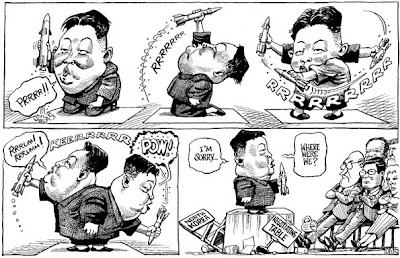
            As a government, North Korea has always been partial to dangerous pyrotechnic displays, and the new ruler Kim Jong Un is no exception. Ever since the nation completed its first nuclear warhead, the challenge for the Korea scientists has been to find a vehicle that will deliver that warhead around the world.
            On December 12, North Korea launched a rudimentary weather satellite into partial orbit above the earth atop a Unha-3 rocket. The nation insists that the launch had nothing to do with military objectives and was merely a scientific exposition. However, weapons experts in South Korea, upon analyzing the debris left by the rocket, stated that the launch was a test of North Korea's ballistic missile vehicle. “They efficiently developed a three-stage long-range missile by using their existing Rodong and Scud missile technology,” a senior military intelligence official said Sunday, briefing reporters on the condition of anonymity.
            If armed, this ballistic missile could at maximum reach any target within 6,000 kilometers of North Korea. However, before you worry, experts are unsure as to Korea's ability to weaponize the missile. Analysts doubt that North Korea has mastered the technology needed to make a nuclear bomb small enough to mount on a missile. If they do manage to miniaturize their warhead, the furthest target Korea could possibly hit would be Sarah Palin's home.

3. Russian Presidential Election
            Vladimir Putin has long been famed for his physique and feats of strength and valor. This year, it appears that the Russian he-man has strong-armed his way back into power as the president of Russia. After serving as the premier for his protégé Dmitry Medvedev, Putin switched places in the last election, taking the presidential title and choosing Medvedev as his premier. This is not the first time Putin has been president either: he previously held the position from 2000 to 2008.
            If you think something smells fishy, you are not alone. In the latest Russian election, not only did Putin win, but all candidates from his party either reclaimed seats or defeated opponents as well. This apparent election-rigging caused numerous protests from citizens and complaints from international watchdog groups. In response, the government has severely cracked down on dissension and contact with foreigners.  Russia has been down this road before; lets hope they remember the outcome in 1991.

4. Aung San Suu Kyi Elected
            In the CPI (Corruption Perceptions Index) rankings for 2012, the nation of Myanmar (previously known as Burma) ranked as the third most corrupt government in the world. One woman however is attempting to change that statistic.
            Aung San Suu Kyi is the leader of the Burmese National League of Democracy (NLD), the opposition party in Myanmar's parliament. The NLD has a 59% majority in parliament for this session, for the first time in decades. Suu Kyi's election was a landmark because of all of the NLD candidates elected, she has been the most verbal, the most outspoken, and the most aggressive in pursuing sweeping reforms to Myanmar's faulty government. In the last election that she participated in, in 1990, she was placed under house arrest for twenty years, becoming one of the world's most noted political prisoners. This political prisoner however has now set out to change the system that imprisoned her.
            For all of her work, Suu Kyi was this year's recipient of the Nobel Peace Prize and the Congressional Medal of Honor. Not only has she called for reforms within her own country, but also reforms around the world, making her a strong advocate on the international stage. For her courage and fortitude, world leaders have lauded her, including US President Barack Obama and UK Prime Minister David Cameron.

5. Syrian Civil War
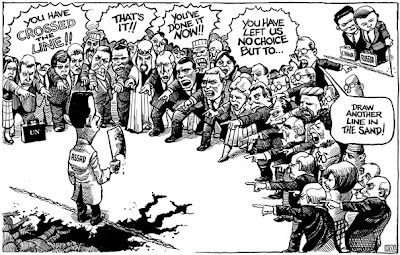
            It seems that there has been a news story from this conflict on the front page every day. The Syrian civil war is a bitter battle that shows no signs of coming to an end. What began as a mostly peaceful protest against dictator-president Bashar al-Assad in hope of reform has become a fight to the death between the Free Syrian Army and the Syrian government with innocent civilians caught in the crossfire. It is estimated that between 50,000 and 57,000 people have died in the fighting, with over 23,000 of those casualties being non-combatants.
            The war has spilled over into the nearby nation of Turkey on occasion as well, causing Turkish casualties and international ire. However, Assad was already in the proverbial international doghouse due to his regime's human rights violations. From mass executions to rigged juries, Assad is accused of numerous crimes against humanity. In a recent attempt to prevent further innocents being killed en-masse, the United States has deployed Patriot missile batteries to the Turkey-Syria border to deter Assad from firing his biological and chemical weapons on the Syrian rebels. Policy officials at the Heritage Institute note that Assad realizes that he is losing his grasp on his power. Assad recognizes the fact that it is only a matter of time before his end--and he will make sure to cause as much damage possible in his death-throes. As one man once put it, "Some men just want to watch the world burn."
           
6. Chinese Presidential Selection
            Of all of the transfers of power staged this year, the Chinese presidential selection promises to hold the most implications for the rest of the world. This year the elite political body that forms the core of the Chinese Communist Party (CCP) was reshuffled. The Politburo Standing Committee (PSC), as this body is known was announced to the world with new faces and a new organization. The number of seats on the PSC shrank from nine members to seven and included the names at the top of many speculative lists: Xi Jinping (President), Li Keqiang (Premier), Zhang Dejiang, Yu Zhengsheng, Liu Yunshan, Wang Qishan and Zhang Gaoli.
            Cheng Li of the Brookings Institute says that these choices do not bode well for those who were hoping to see some political reform in China. "This Party congress has sent a very clear signal that this leadership is politically conservative." While in America, conservatives are considered the best choice for achieving political reform, in China, the selection of conservatives signals a maintenance of the dictatorial power exercised by the state so far, Li believes. However, Noah Feldman, a constitutional law professor at Harvard, thinks that the streamlining of the PSC and the overall willingness to change leadership shows promise for reform: "China isn’t on the royal road to democracy or to capitalism without major state direction. But in 2012 it reaped the benefits of its historic move away from dictatorship -- and in historical and comparative terms, that’s impressive enough."
            Like any election, we will just have to wait to see how things pan out for the governing body of China.

7. Israel-Gaza Conflict
            You might ask, what else is new? After all, it seems that the Israeli-Gazan fighting is always on the front page and is always considered a momentous event. Well, I'll admit that you are correct. However, I think that this issue deserves some attention, especially because of some of the new developments in that arena.        
            In August, a rash of rocket attacks by Hamas fighters spurred retaliatory attacks by the Israeli SDF; Israeli airstrikes, missiles, and artillery quickly struck back at the rocket launch sites. These airstrikes spurred only more rocket attacks by Hamas, and both sides found themselves in a tit-for-tat fight with the innocent populace caught and killed in between.
            The military tensions were only worsened when the UN granted Palestine observership status within the council, lending legitimacy to Palestine's cause. To make matters worse, new evidence surfaced that Yasser Arafat, beloved leader of the PLO, may have been assassinated by Israeli agents. Only causing more anger by Gazans was Israel's decision to continue the expansion of its Jerusalem settlements, encroaching on the border that Palestine claims.
            A ceasefire was finally reached in late November, but not before hundreds had died. This is one conflict where both sides seem to repeat their mistakes, and with great vigor. The old adage says that nothing new happens in the world--it is merely history repeating itself. The Israel-Gaza conflict proves that point perfectly.

8. EU Financial Crisis & Bailouts
            In the 2008 foreign film Slumdog Millionaire, one of the characters makes a rather astute judgment: "There are two reasons to make mistakes in this life: money and women." While promiscuity may not be a problem, money has certainly caused its share of troubles for the European Union and its Euro this year. The European financial problems of last year became the European financial crisis of this year, with several nations almost declaring complete bankruptcy. Greece, on the verge of financial collapse, even attempted to leave the failing organization in the hope that as a nation it could define its own economic freedom.
            Realizing the imminent threat of complete EU collapse brought about by not only Greece's wage woes, but also the troubles of Spain and Italy as well, German chancellor Angela Merkel quickly put together a bailout package. The Eurozone countries approved a 237-billion-euro rescue package for Greece, as well as for Spain and Italy. Economic officials at Bloomberg believe that while the bailouts did afford some slight benefit, the danger of defaulting on the debt still looms.
            On a interestingly related note, when the Corruption Perception Index (CPI) was published for 2012, the nations who received bailouts were found to have ranked 5 or 6 places lower than previously (indicating more corruption). Apparently money, as well as power, corrupts.

9. Attack on US Embassy in Benghazi
            The attack on the US Embassy in Benghazi, Libya that left 5 Americans dead, including ambassador J. Christopher Stevens has been called many things: a terrorist attack, a freak explosion of violence, a retaliation for the infamous anti-Muslim video published in the US. Finally however, we have answers: an independent inquiry as well as a congressional committee have both come to the conclusion that the attack was premeditated and carried out as a terrorist strike.
            As the New York Times reports, the independent report slams the “systemic failures and leadership and management deficiencies at senior levels” in the State Department’s bureaus of diplomatic security and Near East affairs that resulted in a “security posture that was inadequate for Benghazi and grossly inadequate to deal with the attack that took place.” Problems with security, intelligence, and grasp of the situation plagued the Obama administration both during and after the attack. However, it seems that the administration is responding appropriately now. The Times goes on to note that "Mrs. Clinton accepted all of the panel’s 29 recommendations and has already begun to make changes."
            As to the mastermind behind the attack, FBI and CIA agents have questioned a suspect who was detained in Turkey, then extradited to Tunisia. Authorities have stated that Ali Harzi, a Tunisian, is "strongly suspected in the attack." It seems that finally answers are forthcoming in this deadly situation.

10. 2012 London Olympics
            The excitement and expectation began to build long before the first athletes moved into the Olympic village in July. On 18 May the Olympic Flame set down on British soil, beginning the torch relay that swept around the country and allowed everyone the opportunity to share in the occasion. Eight thousand inspiring individuals took part, from sporting legends such as Dame Kelly Holmes and fellow Olympian Sir Steve Redgrave to those nominated for their work in the local community.
            Athletes from 204 National Olympic Committees rose to walls and waves of sound as unprecedented levels of support inspired outstanding performances and records tumbled. On the track, Usain Bolt’s double triple (100m, 200m and 4x100 relay gold for the second time) brought cheers not only in the stadium, but also from his home nation of Jamaica.
            In the pool, Michael Phelps graciously rose from Olympic waters for the last time, taking an incredible 22 medal haul with him – 18 of them gold. And in the velodrome Sir Chris Hoy won his sixth gold medal to become the most decorated British Olympian of all time.
            The positive repercussions from hosting the Games will be felt across the UK’s capital for decades to come, thanks to the regeneration of the area and the legacy created by the state of the art stadiums and facilities such as the Velodrome and the Aquatics Centre. London 2012 was an Olympic Games that pervaded the boundaries of sport the world over, and is one that will not be quickly forgotten.
________________________________________________________________________________
           2012 has been an eventful year. We have lived, cried, laughed, mourned, celebrated, and remembered. Like any year, we won't get to live it again, but don't regret it in any way. There is no sense in saying "what if...;" just accept and live with what was.

Saturday, December 15, 2012

We Grieve...

     Yesterday, twenty children died. Twenty kids who hadn't even graduated from elementary school, twenty kids who were loved dearly by their families and community, twenty kids who just  the day before ran and played without a care in the world, gunned down where they stood.

 Yesterday, six adults died. Six mothers, fathers, brothers, sisters, friends; six adults who devoted their lives to teaching and mentoring the future who will never see their work come to fruition; six people who gave all they had for the children they taught.

  We ask how this could have happened. Of all the towns in America Newtown, Connecticut is one of the least touched by crime and poverty, yet is now the site of the worst school shooting in our nation's history. "How is this possible?" we wonder. Of course it was the shooter's fault--Adam Lanza is responsible for every life that passed before his bullets; but we almost want to place the blame elsewhere as well--after all, Americans are normal, stable people. Surely Adam is not solely to blame for this tragedy. It was the legislators who have not passed strict gun laws. It was the US healthcare system for not providing affordable mental counseling. It was Adam's own parents that failed to raise him correctly.

     But why do we need to blame anyone else? This shooting has brought grief to every one of our hearts--why stir up more angst and frustration? For those of you who think this is political fodder, please cease. This is not a "prime piece of evidence for gun control." This is not the platform for more political pontification on our health system. This is where twenty-six innocent souls died. This is where mothers and fathers will never see their children again in this life. This is where children's blood stained the pavement.
     Do not be afraid to mourn those lost.

     Yesterday, I lived life as normal. I spent time with friends; I went and saw a movie; I celebrated this Christmas season with my family. Am I cold? Am I insensitive to the fact that for twenty-six families, Christmas will now be a funeral? Should I have stopped my life because lives ended yesterday? I mourn those killed; I grieve for the families and pray for their loss, however, America, do not be afraid to carry on. Grieve in your hearts but show strength in your actions. If we cease to continue, when shall we begin again? Dedicate the quiet parts of your life to remembering these children and teachers, but do not be afraid to proceed with life.  Courage is rising the the challenge and meeting adversity. Let us meet this adversity with resolve.
     We will remember these dead for decades to come.

     For the families of this tragedy, and all whose hearts were wrenched by this horror--look for hope. Look for peace. Look for joy.
     Look for Christ.
     I don't know why the shooting happened. I don't know how it fits into God's plan. Nay, I do not claim to have the answers. Remember this though: what Christ has to offer is far greater than what you are feeling now. We cannot bring them back...
One of the children wrote this note for his mother the day before dying in the shooting.
...but we can find peace in the arms of Christ.

"Come to Me, all who are weary and heavy-laden, and I will give you rest." 

This sounds like a cliche answer, but it is a true answer. Christ grieves with you over your children. He loved your children. He loved every laugh and smile that came from their lips; He loved every time their eyes lit up with joy.
     America, find commiseration in Christ. He grieves with us today.


Monday, November 19, 2012

Yasser Arafat: A Grave Matter


Former PLO & PA leader, Yasser Arafat (AP)
            The old adage says that dead men tell no tales, however, thanks to modern science and medicine, corpses now can tell their stories. This ability is extremely useful as you may imagine, especially if these corpses happen to be infamous deceased world leaders who suffered, shall we say, controversial deaths.
            Such is the case with the former leader of the Palestinian Liberation Organization (PLO), Yasser Arafat.
            Before you start worrying that some terrorist has resurrected Arafat to lead an army to destroy the world, let me clarify that thankfully that has not happened. Instead, a joint team of Swede, French, Palestinian, Swiss, and Russian scientists are excavating Arafat’s tomb in order to exhume his body to determine whether the former premier was assassinated.

Just a Trace
            Last year, news organization Al-Jazeera published a documentary in which Swiss experts declared that high levels of the radioactive substance polonium-210 had been found on Arafat’s clothing and personal belongings in his home. Polonium-210 is not only one of earth’s rarest elements but also one of the most lethal. Ingesting less than 1 gram (0.04 ounces) of the silver powder can kill a healthy adult in a matter of a week. Polonium first made headlines in 2006 when it was used to kill KGB agent-turned-Kremlin critic Alexander Litvinenko in London.  Once again, the element is suspected as the poison of choice in Arafat’s 2004 death.
            CNN interviewed  Francois Bochud, director of the Institut de Radiophysique in Lausanne, Switzerland. Bochud said his researchers had tested Arafat's toothbrush, clothing and keffiyeh, the distinctive black-and-white headscarf he often wore.
A body fluid stain from the clothing contained 180 megabecquerels per liter of the radioactive isotope, while a typical sample would contain 5 megabecquerels per liter, Bochud said. (A becquerel is a unit of measurement of radioactivity for all of you non-geeks out there.)

Assassination? Maybe.
            The close friends and family of Arafat have long declared that his death was the result of an assassination by the Israeli secret service. Just prior to his death, Arafat claimed repeatedly that Israeli special forces were attempting to kill him. Many ignored his claims as the paranoid accusations of a 75 year-old man against a government that had long frustrated his hopes of seeing Israel and Palestine united again. However, the discovery of the presence of polonium-210 has changed the entire situation surrounding his death, lending credence to the claims of assassination.
            One note must be made though—until the full exhumation and toxicology report is published, no fingers can or should be pointed.

Severe Ramifications
            Extreme care must be taken on both sides of the Israel-Palestine conflict with regards to the results of this exhumation. In addition to the already tense relations over the incessant rocket attacks from the Gaza Strip on Israeli urban centers, and the retaliatory airstrikes made by the Israeli Air Force upon the Hamas/Hezbollah rocketeers, the discovery that Israel assassinated the Palestinian’s beloved leader could force the area into a direct and bloody conflict. As  scholar Michael Fisbach notes “To the end of his life, Arafat remained a polarizing figure. To most Palestinians, he remained  the almost mythical symbol of their drive for independence and dignity, who pulled together a dispersed and downtrodden people, turned them into a movement, and led them to the doorway of independence.”
            The PLO is seeking to cross that threshold of independence that Arafat led them to, as evidenced by the recent bid for UN recognition and membership. The organization is fiercely determined to achieve acceptance upon the world stage, and to find that Arafat was assassinated would make the PLO all the more determined to fulfill that dream. Arafat longed to see a free Palestine and his legacy still lives on. If he was truly a martyr for the cause, then the cause will be seen as all the more legitimate: a dangerous place for both Israel and the entire Middle East to be in.
            In life, Arafat was, as Fisbach said, a polarizing figure. He was labeled often as a terrorist, yet was a recipient of the distinguished Nobel Peace prize for his efforts.  In life, he wished to be able to tell the story of Israeli-Palestinian peace, but now in death his remains may only begin yet another tale of violence.