Pages

Showing posts with label America. Show all posts

Tuesday, April 30, 2013

Time to Talk? [North Korea Throwdown]

     
North Korea still remains skeptical of
US diplomatic attempts.
               After dominating headlines for the last month, North Korea has hinted that it may be willing to bring an end to its nuclear brinkmanship and begin a new round of talks with the United States. Pyongyang issued a detailed statement this past week outlining its terms for the dialogue, including demands that the US cease its “nuclear war practice” and annual war games with South Korea and rescind the stringent sanctions against North Korea’s economy.
               “They should take measures of retracting the U.N. Security Council’s ‘resolutions on sanctions’ cooked up under absurd pretexts,” the Policy Department of the National Defense Commission, North Korea’s highest governing body, said in a statement carried by its official Korean Central News Agency. “They should give formal assurances before the world that they would not stage again such nuclear war drills to threaten or blackmail [the North].”
                In response, a South Korean defense ministry official requesting anonymity stated “The tensions should gradually decrease from here, but we cannot lose ourselves to complacency. We do still have to be prepared for any provocations.” Nevertheless, as US Secretary of State, John Kerry, said during his recent visit to the peninsula, “...our preference would be to get to talks.”

                The only question remaining is what will the talks focus on?

Diplomatic Disasters
                World diplomacy with North Korea has a long and troubled past, plagued by the fact that US and international officials are completely unsure of the nation’s political status. Forced to use a fuzzy interpretation of state propaganda and gathered intelligence as a barometer, US diplomats have often missed key opportunities to get through to either of the Kim Jong’s. In the past, the US mantra has been to stop the North Korean nuclear program and to guarantee South Korea protection should Northern threats be actualized. However, if the US enters this new set of talks with the same mindset, the only item that will be guaranteed is a continuation of the vicious cycle of threats and provocation.
                Now that North Korea has a nuclear weapon, as well as the ability to launch such warheads globally coming in the near future, the US cannot afford to continue to treat North Korea as a misbehaving child but instead must look upon them as a viable threat. With that in mind, US diplomats need to recognize the fact that the current diplomatic stance only makes Kim Jong Un feel more threatened than reassured.

Ready for Reform
                Were Kim Jong Un reassured, the world might begin to see North Korea open up to more western thought and technology. Kim Jong Un has discussed improving North Korea’s dying economy and has hinted that the nation may move in the direction of reforms [however slight]. This fact was evidenced by the recent visit of Google CEO Eric Schmidt to Pyongyang, showing that Un may be ready to allow new development in North Korea.
                However, Charles Armstrong, Director of Korean Research at Columbia University, believes that any hope of change will be stifled by the current US approach to North Korean relations. “The dilemma, though, is that North Korea can only embark on serious reform from a condition of what it considers absolute security,” Armstrong notes in an op-ed for CNN. “Unfortunately, the quest for security and the desire for economic improvement have been in contradiction for some time. A genuine opening could unleash political and social changes...while the path of security through nuclear deterrence and missiles have led time and again to confrontation and renewed isolation.”

                The old adage states “Do not attempt to reason with a fool. He will only drag you down to his level and beat you over the head with his ignorance.” Call it nationalistic, but North Korea has been foolhardy in its recent provocation of the US. As history has shown, you cannot beat the ignorance of out of the communist political system, but instead, you can speak a language that they do understand: money. Only by providing  strong incentives instead of punishments, obtainable rewards instead of sanctions, and deliberate reassurance instead of threats in kind, will the US and the rest of the world slowly lure North Korea down the path of peace.


Sources:


-Charles Armstrong, “Why Sticks don’t work with North Korea,” January 25, 2013, http://globalpublicsquare.blogs.cnn.com/2013/01/25/why-sticks-dont-work-with-north-korea/

Sunday, April 28, 2013

Under Pressure...

Found this article online, and thought it was brilliant.

Enjoy.

----------------------------------------------------------

By Noah Lotte

                For the politicians on Capitol Hill, I have yet another issue to bring to the table. I realize that you are extremely busy debating immigration and soundly arguing over gun control, however, recent events beg your attention elsewhere. To my fellow Americans, I recognize that we all struggle to meet our mortgage payments, much less figure out how much in taxes we actually do owe the government, but the time has come for us to recognize the newest threat to our liberties and freedoms.
                I have been deeply saddened the last week, praying for the families of those killed and maimed by the dual explosions at the Boston Marathon.  I dearly hope that this atrocity will never be forgotten and shall never be repeated. We must do our utmost to prevent such a bombing from ever occurring in the future. Examining the sequence of events that brought about the attack, it is clear what course of action we must take.
                For the sake of our liberties and our national security, I believe that legislation must be passed to ban the use and sale of pressure cookers. It was these everyday items that were used in the bombings, and had the terrorists been unable to access the cookers, these attacks could have well been prevented.  We must remove these tools of destruction from our homes and from our society. There will always be groups opposed to such legislation, but we cannot afford to let our political opinion stand in the way of safety. At the very least, we must require extensive background checks for anyone attempting to purchase a pressure cooker. Allowing a pressure cooker to fall into the wrong hands will only have the same consequences as those in Boston. It is our added civic duty to ensure that crazy aunt Matilda cannot unrestrictedly use pressure cookers as well.  Recognize we have just as much a duty to protect that nation as the government.
                In addition to background checks, we must also work to limit the amount of atmospheres pressure cookers can withstand. Currently, the average pressure cooker allows the user to build the pressure up to dangerous levels, as evidenced by the numerous pressure cooker accidents that have occurred in the last decade. Were we to limit the amount of pressure per cooker, we will reduce the potential devastation wreaked by accidental and purposeful explosions.
                My fellow countrymen, if I were the president and I knew this legislation would save one life, I would pass it. If I knew it would save a hundred lives, I would pass it.  But simply knowing the enormous danger that the unregulated use and purchase of pressure cookers poses to our society’s safety is enough.  We cannot afford to live in the past where these so-called “useful” items are freely accessible to anyone—if we are unsafe now, we may never have a future.
                Let us all put our signatures to this legislation and with our pressure protect the nation for our children.

Tuesday, February 26, 2013

Dear Money...

     Should the government spend more money to stimulate the economy? Should the government spend less and let the private sector be the stimulus? The debate in the US rages back and forth.

     And then I found this article. Its from my macroeconomic class [so it may refer to "last chapter"], but I think it provides some good points against increasing government spending.

     Feel free to debate it.
-------------------------------------
(from Gwartney & Stroup Macroeconomics 5th Edition)

Fiscal Policy 

What do we mean by the term fiscal? Merriam-Webster says that it comes from the Latin word fiscus, which means “basket” or “treasury.” It has come to mean anything pertaining to government financial matters. This can include government taxation, spending, and borrowing. All three of these areas of fiscal policy will affect the economy. Basically, changes in the government’s budget affect the overall economy. How so?

When the government spends more than it receives as revenue, there is a budget deficit. Assuming a constant money supply, the deficit is funded by borrowing. Typically, the US Treasury borrows by offering bonds.

When government revenues exceed government spending, there is a budget surplus. The surplus will reduce the government’s debt burden.

What causes the government’s budget to change? General changes in the economy affect both taxes and spending. Also, there may be intentional changes in government spending or taxation. This is called discretionary fiscal policy.

Last week we began our discussion of attempts to correct economic instability. This week our focus will be on attempts to use fiscal policy to affect the economy. You have already been introduced to Keynesian theory In general. Keynesian theory led the government away from the desire to balance the budget. Why would we want to balance the budget when we could simply change our spending habits to fix the economy?

The Keynesian view of fiscal policy is that the government can influence the economy by changing its budget. When we are in a recessionary period, a Keynesian would suggest that we should either increase government spending or reduce taxes. In other words, running deficits will help move us towards potential output and full employment. If inflation is becoming a problem, a Keynesian would suggest that reducing government spending or increasing taxes would put downward pressure on prices. So, running a surplus should help curb inflation.

If we have the tools to make it so, why isn’t our economic world perfect?

Crowding Out: reality sets in and spoils our noble ambitions…

This sounds like a nice simple idea, but there is a significant problem associated with borrowing to finance a government deficit. Do you remember our discussion a couple of weeks ago about how resource markets are interrelated with the overall market for goods and services? Government borrowing affects the demand for loanable funds. When the government needs to borrow funds to cover a deficit, it increases the overall demand for loanable funds. Other things constant, this pushes the price of loanable funds (the interest rate) upward. The higher interest rates will dissuade private spending. This scenario is referred to as crowding out. Thus the increased borrowing of the government crowds out the private sector from borrowing and spending. This makes the deficit-running fiscal policy less effective.

There is even more to this situation. Remember that higher interest rates will draw interest from foreigners who want to invest in dollar-denominated financial assets, thus making the US dollar relatively more valuable (appreciating against other currencies) and leading to a decline in net exports. (It will be more expensive to purchase goods with dollars.) So, the crowding out effect pretty much wipes out the intended effect of the policy. Whew! And we just thought we could run a little deficit and fix the economy… Oh boy, what a mess we have gotten ourselves into!


But wait, it appears there may be even more going on…

What if people realize that someone is going to have to pay for that new government spending? After all, we are no dummies. The New Classical view of fiscal policy argues that people will anticipate having to pay more future taxes due to current government spending and borrowing. This awareness will cause them to save more and spend less. The reduction in spending caused by increased savings will offset the deficit’s affect on the interest rate as well. Thus, the fiscal policy is really of no use. 


Even more discouraging news for those who would perfect the market via fiscal policy…

Do you remember how President G.W. Bush sent out checks to help stimulate the economy? Did you notice the time lag between reading about his intentions in the news and actually holding a check in your hand? That time lag is also a classic problem with discretionary fiscal policy. In fact, if it takes too long for a fiscal policy to actually be carried through, the result may be all wrong.

It should also be noted that there are some automatic fiscal stabilizers already in place. Unemployment compensation, corporate tax profit, and progressive income taxes work in opposition to the direction of the economy. When national output and income rise, unemployment compensation declines, corporate tax revenues increase and progressive tax revenues increases. On the other hand, when national output and income decline, unemployment compensation expenditures increase, corporate tax revenues decline and progressive tax revenues decline. So, these items tend to increase the budget deficit automatically during times of recessions and increase the surplus (or decrease the deficit) during expansions.


Could things get worse?

If you thought that you could fix the economy by implementing fiscal policies, I am sorry to disappoint you, but I must add this one last downside to the whole concept. I could sum it up in one word – politics. Politicians are motivated, as everyone else, by self-interest. For that reason, they will be much more likely to vote for expansionary policies than restrictionary policies. Politicians who vote for more spending are generally more popular than those who vote for restricting spending. This naturally makes deficit spending more likely, even when inflation is high.


Let’s sum it all up.

Here is the modern-day wisdom regarding fiscal policy:

· Timing is difficult and critical.

· Automatic stabilizers tend to move us towards potential output and full employment.

· Fiscal policy is not really that productive.

· All the demand-side policies we have discussed thus far will have differing results based upon all sorts of variables.


So, as time has passed, the potency of fiscal policy has come into question. Please be sure to pause a moment to review actual government budget figures which are presented in Exhibit 8. You may continue the graph in your own mind to include the massive spending of the recent years and imagine what sort of long-term effects may emerge from the current administration’s policies.

Wednesday, January 16, 2013

Divorce Notice...

A friend sent this to me. Its snarky, but sometimes I think a bit of humor is needed in politics. A good idea? I'll leave that to you to decide.
(note: this is not my own work)
_________________________

DIVORCE AGREEMENT


Dear American liberals, leftists, social progressives, socialists, Marxists and Obama supporters,et al:

We have stuck together since the late 1950's for the sake of the kids, but the whole of this latest election process has made me realize that I want a divorce. I know we tolerated each other for many years for the sake of future generations, but sadly, this relationship has clearly run its course.

Our two ideological sides of America cannot and will not ever agree on what is right for us all, so let's just end it on friendly terms. We can smile and chalk it up to irreconcilable differences and go our own way.

Here is a our separation agreement:

--Our two groups can equitably divide up the country by landmass each taking a similar portion. That will be the difficult part, but I am sure our two sides can come to a friendly agreement. After that, it should be relatively easy! Our respective representatives can effortlessly divide other assets since both sides have such distinct and disparate tastes.

--We don't like redistributive taxes so you can keep them.
--You are welcome to the liberal judges and the ACLU.
--Since you hate guns and war, we'll take our firearms, the cops, the NRA and the military.
--We'll take the nasty, smelly oil industry and the coal mines, and you can go with wind, solar and biodiesel.
--You can keep Oprah, Michael Moore and Rosie O'Donnell. You are, however, responsible for finding a bio-diesel vehicle big enough to move all three of them.
--We'll keep capitalism, greedy corporations, pharmaceutical companies, Wal-Mart and Wall Street.
--You can have your beloved lifelong welfare dwellers, food stamps, homeless, homeboys, hippies, druggies and illegal aliens.
--We'll keep the Alaskan hockey moms, greedy CEO's and rednecks.
--We'll keep Bill O'Reilly, and Bibles and give you NBC and Hollywood .
--You can make nice with Iran and Palestine and we'll retain the right to invade and hammer places that threaten us.
--You can have the peaceniks and war protesters. When our allies or our way of life are under assault, we'll help provide them security.
--We'll keep the SUV's, pickup trucks and oversized luxury cars. You can take every Volt and Leaf you can find.
--You can give everyone healthcare if you can find any practicing doctors.
--We'll continue to believe healthcare is a luxury and not a right.
--We'll keep "The Battle Hymn of the Republic" and "The National Anthem."
--I'm sure you'll be happy to substitute "Imagine", "I'd Like to Teach the World to Sing", "Kumbaya" or "We Are the World".
--We'll practice trickle-down economics and you can continue to give trickle up poverty your best shot.
--Since it often so offends you, we'll keep our history, our name and our flag.

Sincerely,

John J. Wall
Law Student and an American

P.S. Also, please take Ted Turner, Sean Penn, Martin & Charlie Sheen, Barbara Streisand, & ( Hanoi ) Jane Fonda with you.

Saturday, December 15, 2012

We Grieve...

     Yesterday, twenty children died. Twenty kids who hadn't even graduated from elementary school, twenty kids who were loved dearly by their families and community, twenty kids who just  the day before ran and played without a care in the world, gunned down where they stood.

 Yesterday, six adults died. Six mothers, fathers, brothers, sisters, friends; six adults who devoted their lives to teaching and mentoring the future who will never see their work come to fruition; six people who gave all they had for the children they taught.

  We ask how this could have happened. Of all the towns in America Newtown, Connecticut is one of the least touched by crime and poverty, yet is now the site of the worst school shooting in our nation's history. "How is this possible?" we wonder. Of course it was the shooter's fault--Adam Lanza is responsible for every life that passed before his bullets; but we almost want to place the blame elsewhere as well--after all, Americans are normal, stable people. Surely Adam is not solely to blame for this tragedy. It was the legislators who have not passed strict gun laws. It was the US healthcare system for not providing affordable mental counseling. It was Adam's own parents that failed to raise him correctly.

     But why do we need to blame anyone else? This shooting has brought grief to every one of our hearts--why stir up more angst and frustration? For those of you who think this is political fodder, please cease. This is not a "prime piece of evidence for gun control." This is not the platform for more political pontification on our health system. This is where twenty-six innocent souls died. This is where mothers and fathers will never see their children again in this life. This is where children's blood stained the pavement.
     Do not be afraid to mourn those lost.

     Yesterday, I lived life as normal. I spent time with friends; I went and saw a movie; I celebrated this Christmas season with my family. Am I cold? Am I insensitive to the fact that for twenty-six families, Christmas will now be a funeral? Should I have stopped my life because lives ended yesterday? I mourn those killed; I grieve for the families and pray for their loss, however, America, do not be afraid to carry on. Grieve in your hearts but show strength in your actions. If we cease to continue, when shall we begin again? Dedicate the quiet parts of your life to remembering these children and teachers, but do not be afraid to proceed with life.  Courage is rising the the challenge and meeting adversity. Let us meet this adversity with resolve.
     We will remember these dead for decades to come.

     For the families of this tragedy, and all whose hearts were wrenched by this horror--look for hope. Look for peace. Look for joy.
     Look for Christ.
     I don't know why the shooting happened. I don't know how it fits into God's plan. Nay, I do not claim to have the answers. Remember this though: what Christ has to offer is far greater than what you are feeling now. We cannot bring them back...
One of the children wrote this note for his mother the day before dying in the shooting.
...but we can find peace in the arms of Christ.

"Come to Me, all who are weary and heavy-laden, and I will give you rest." 

This sounds like a cliche answer, but it is a true answer. Christ grieves with you over your children. He loved your children. He loved every laugh and smile that came from their lips; He loved every time their eyes lit up with joy.
     America, find commiseration in Christ. He grieves with us today.


Wednesday, October 3, 2012

Debate for the White House #1...

     Tonight promises to be interesting. At 9pm, we will find out if both candidates can manage to avoid gaffes, stay cool, and still zing those one-liners at each other and the audience. Although Romney and Obama have distinctly different speaking styles, they both are seasoned and well-grounded speakers.  This debate is the culmination of weeks of preparation. To prepare for the debates, both candidates have used sparring partners: Romney has practiced with Ohio Sen. Rob Portman; and Obama has prepared with Massachusetts Sen. John Kerry.
     On a side note, both candidates also have distinctive traits that appear when they are flustered. Here's what to watch for:
     --Obama: Tends to begin to drone on about a topic. He used to be a lecturer for law students, and he is most comfortable with that type of delivery; a monotone speech littered with vocabulary beyond the average person's.
     --Romney: Becomes excited and uses his hand gestures without purpose. Romney tends to be a slightly more dynamic, excitable speaker, and the excitement grows as he becomes flustered.

     Want to watch the debate? Starting at 9pm Eastern, the debate will be streaming live below.


Tuesday, September 11, 2012

In Memoriam...

     Eleven years ago, I was six. I remember seeing passenger jets with terrorists at the controls and innocent civilians huddled in the seats slam into the sides of World Trade Centers One and Two. I remember watching the graceful glass and steel crumble into concrete and ash around the impact as the fireball enveloped the upper floors. I remember stoically watching the faces of panicked pedestrians and newsmen blurting out the story before the debris of Tower One filled the streets as the building fell.  Seeing the tower crumple in on itself like a card house, floor falling through floor, and hearing the announcer exclaiming "Oh my God! Oh my God!" I finally grasped what had happened, and realized that nothing was going to be the same.

  I continued to watch, eyes glued to the screen, as survivors who escaped the building told stories of the bloody chaos and destruction on every floor of the Towers. The anguished voices of wives and mothers filled the newscast, calling the station to ask about the welfare of their loved one, And above all of the mayhem, reports began to stream in that another plane with hundreds of husbands, wives, sisters, and brothers had slammed into the western side of the Pentagon.  The images of firemen at both sites carrying away the wounded and dead are pictures that I, nor America, can ever forget. I knew I was safe in my small-town Virginia house, but the terror of the moment touched me as well, as it did Americans all across the nation.
   
    We did not know anyone at the Towers or the Pentagon, but their pain and fear became our pain and fear. We did not know the people courageous enough to drag coworkers out of the inferno or attack terrorists in the cockpits, but those people became our heroes too. We rose up as Americans and vowed to endure, to rebuild, and to never forget. Though the road of rebuilding has led us through two bloody and stigmatized wars in Iraq and Afghanistan, we have never stopped devoting ourselves to the idea that never again will 3,000 Americans perish in an attack on their homeland. We are the land of the free and the home of the brave, but only because those who died fighting for freedom were brave enough to remind us how precious our liberty is.

    Many have asked, where was God at Ground Zero, the Pentagon, or on Flight 93? I will tell you that He was right there with every person who perished, His heart broken that so many of His children died in the space of five hours. Why did He allow 9/11? I must say that we cannot know for sure; as Isaiah the Prophet explains this in Isaiah 40:13, "Who has understood the mind of the LORD, or instructed him as his counselor?" However, understand this, that the Lord's plan, while it may look destructive, is more beautiful than we could ever foresee.We cannot see the pattern of the tapestry God is weaving. We are on the other side of the loom looking at knotted threads placed seemingly without purpose. Occasionally we can catch a glimpse of the design,but then as soon as we think we have it pegged, a new thread or knot is placed that changes everything. Only when we meet God face to face in Heaven will we see his master plan. 

     Until we see this master plan however, know that there is a greater hand at work in the world than terrorist masterminds. Today is a day to never forget the patriots who died on 9/11, but also a day to never forget that there is more to the world than flesh, blood, and concrete. 


To those who saw the fire,
To those who felt the pain,
To those who were under rubble,
The places where loved ones were lain.
Your courage to face what had crumbled,
With patriotism, you took a stand;
Though through your hearts destruction rumbled,
And felt the evil planned.
Your sacrifices we shall never forget,
In the shadow of the Towers.
With tears on cheeks, but faces set,
You showed the world that Courage and Love still hold power.

911--never forget


Wednesday, September 5, 2012

Debt Forgiving Debt...

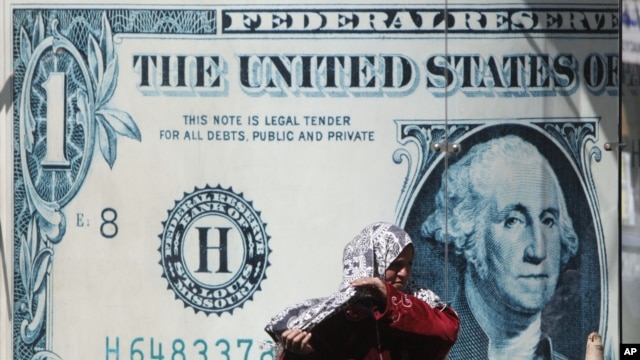
An Egyptian woman adjusts her veil in front of a poster
outside an exchange office. (VOA)

           This past week, the United States grew close to finalizing a deal with Egypt’s new Muslim Brotherhood government and president, Mohamed Morsi, to help Egypt cut $1 billion from its national debt. Aside from the irony of one of the most debt-laden countries helping another nation pay off its own debt, the diplomatic move for the United States promises numerous benefits.
As the new Egyptian political system stabilizes, the Muslim Brotherhood ruling party has set its eyes on dramatically reducing the amount Egypt owes to foreign nations. This past month, President Morsi set off on a whirlwind tour of the world, not only re-establishing diplomatic relations with China, Syria, Russia, and the EU, but also requesting funds to help re-establish democratic relations within Egypt. Overall, Mr. Morsi’s requests have been successful with China pledging $270 million, the International Monetary Fund (IMF) throwing its support behind a $4.8 billion loan, and over $375 million invested by American financiers (in addition to the $1 billion provided by the American government). However, numerous Congressmen and taxpayers are wondering one thing: where does the money that President Obama pledged Egypt come from?

Where is the money coming from?
            The official explanation from Patrick Ventrell, the State Department’s acting deputy spokesman is that the $1 billion is not “new money.” And surprisingly, for once, the government seems to be correct. Like clockwork, the United States has given over $1.2 billion per year in military aid for the past few decades. Throughout the years, the account books have fluctuated back and forth until Egypt came out in the red—owing the US over $3 billion. Essentially, the money that the Obama administration is giving/forgiving out of the Egyptian debt is the money that would have gone to Hosni Mubarak for military support. In other words, the United States regularly gives Egypt $1 billion per year, so this deal is nothing new.
                        Except for the fact that the U.S. has already given Egypt millions this year. According to the 2012 Appropriations act signed by Obama in December 2011, the U.S. would only give to Egypt if the government was "supporting the transition to civilian government, including holding free and fair elections; implementing policies to protect freedom of expression, association and religion and due process of law." However, the act allowed the Secretary of State to waive that requirement, which Hillary Clinton did in March, increasing the amount donated to over $1.7 million per month given to Egypt.

The reason for the charity.
            As usual, there is a method behind the madness. Maintaining a strong U.S. presence within Egypt, either militarily or monetarily, is key to preserving Middle-East accessibility and Egypt-Israel solidarity, notes Patrick Ventrell. As the New York Times reports, given Egypt’s influence in the Arab world, officials said, its economic recovery and political stability could have a profound influence on other nations in transition and ease wariness in Israel about the tumultuous political changes under way.
            It is  an economic fundamental that nothing is free—you always have to give to get. In this case, the U.S. is trading money for security. One question remains unanswered and unasked however: do we even have the money to spend?

_________________________________________________________________________________
Sources:

Wednesday, March 7, 2012

You are forbidden to say "No"...

     There is a planet in our universe where right is quickly becoming wrong, and wrong is hurriedly transforming to right. The planet believes that shape-shifting morals is the perfect system for life. This same planet also is a proponent of Inter-Galactic "Free-Choice," where everyone is free to live as they please, act as they like (within legal barriers of course), and think as they want.
     But they aren't allowed to say "No."
    Within this planet, there are specific issues to which it's citizens (and subsequent galactic travelers from other worlds, once they are discovered) simply must comply. If they do not comply, the populace shouts them down as bigots, backwards, and marshmallow heads. They are overruled in the courts.
 
     A few days ago in Britain, an elderly couple who owns a Bed and Breakfast in the English countryside lost their court case to another couple whom they had refused hospitality at the hotel. The presiding judge ruled that the refusal amounted to unlawful, direct discrimination. Discrimination against whom?
    The couple who was trying to stay at the Bed and Breakfast was homosexual.
    Out of their beliefs the elderly host couple refused the two men a room because they believed that solely civil union (as well homosexual union) did not constitute a marriage. The host couple is considering appealing the ruling, especially because they believed that it was in their right as private business owners to allow or disallow people to stay at their inn. In addition, they believed that it was their prerogative to act according to their religious convictions: that homosexuality is wrong.
   But the British court forbid them to say "No."
   The reasoning behind the decision was that as a commercial enterprise, the B&B was subject to community standards, rather than the owners' private standards.
    Is this what religious freedom looks like?
    I realize that the homosexual couple may have been looking forward to a nice weekend at a B&B in the English countryside, but never, never, never should vacation plans supersede religious belief.

     This issue is now growing in America. I foresee many instances like this one where Christians refuse Homosexuals because the lifestyle is one of sin. Homosexuality is unnatural, unhealthy, and detrimental to the entire family, which is the foundation of our civilization. Christians naturally will refuse to extend the hand of welcome to this unnatural lifestyle. They love the sinner, but the sin is something Christians cannot support.

   The question is, whose beliefs will be overruled?

Monday, November 14, 2011

Your Opinion...

     Today my mom received a survey from the Republican National committee with a survey enclosed. The survey was asking her opinion on the condition and state of the U.S. I thought to myself, now why can't the 'non-voters' aka the youth, have their own survey as well? So, I created this from the questions in the letter survey. Take it and share it--the more responses, the better. When it starts to slow down, I'll post the results.
What's your opinion?
********************************************************************************

Wednesday, November 2, 2011

Go Sling Some Mud....

      Mudslinging. Muckraking. Private Investigations. Scandals. Nomination.

      These things all have one thing in common: the Presidential Election Race. Just take a look at the latest headline, "CAIN ACCUSED OF HARASSMENT", and it's easy to see that the candidates spend just as much time (maybe more) degrading their opponents, as they do informing the public of what they would do if president. Finding dirt on the other people in the race is now more important than revising tax plans or coming up with better ways to protect the border than "electrifying the fence and putting in a moat with alligators". Why are politics always hand-in-hand with mudslinging? The answer is, the candidates feel like they must separate themselves from the field of potential candidates. By calling people names? Mr. Perry and Mr. Romney have shown that mentality with Perry calling Romney a cultist (Mormons=cult), and Romney tries to make Perry look like just an idiot from Texas. What do these candidates expected to get elected on? "If I become president...I promise to label all Texans as idiots, and all Mormons as occultists." Surely the muckraking is unnecessary.
     Let's take a history lesson; let's look back to the 1920's. In that decade, America had two presidents: William Harding and Calvin Coolidge. William Harding was a horrible president; in his White House, scandals abounded. But look at Calvin Coolidge. Coolidge was Harding's vice president who succeeded to the presidency after Harding died mid-term. Coolidge served the last year of Harding's White House, then decided to run for reelection. Coolidge was a man of few words, and his campaign was one of the most subdued in history. He would stand on a stage, inform the people of his plans and beliefs, then get off. Not one of his speeches were directed at his opponents, not one of his words slandered his competition. Clearly, the American people liked his style, because he was elected president by a margin never seen before. He garnered over two million more votes than both his opponents combined. And he did it all without slinging mud or 'getting the dirt' on his opponents.
     Politicians, take a lesson from Coolidge--give the name-calling, back biting, scandal digging a rest. The American people aren't looking for a person who can label or investigate well; the American people are looking for someone with character and leadership.
     If you live in a glass house, don't throw rocks; if you live in a White House, don't throw mud.